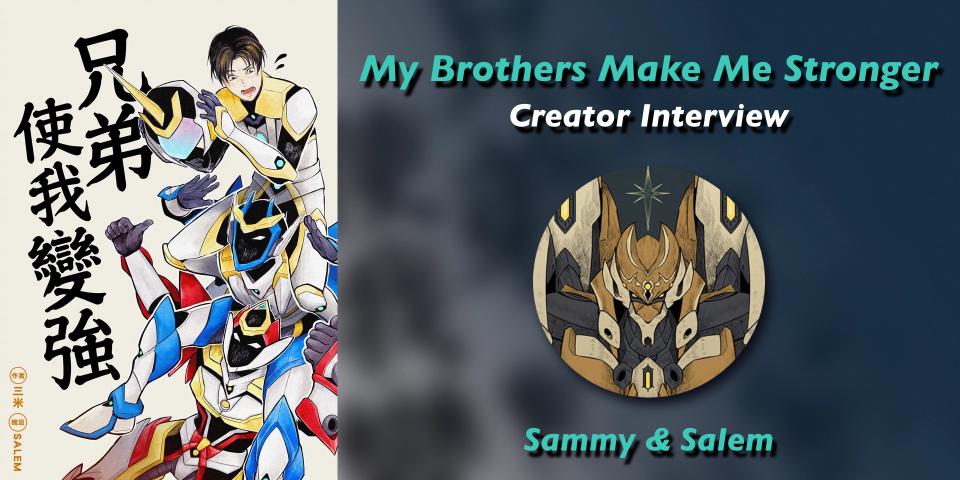

Q1. Thanks for speaking with us! Can you tell us about your grand vision for this title and what you hope to achieve with it?
Thank you for the interview.
In an age when everything is changing so rapidly, we felt that finding ways to stay grounded while adapting to change is more important than ever. This led us to create a story centered on the theme of "adapting to change."
Set in a science-fiction world inspired by the present day, the story explores a future in which the boundary between humans and technology is becoming increasingly blurred, while rules that were once accepted as truth are being questioned and overturned. In such a world, how will the people living in this era find something they can rely on to keep themselves grounded?
With this vision in mind, we planned a story of around 20 episodes. When developing the opening chapter, we deliberately kept the structure relatively conventional and polished, taking into consideration that it would be submitted to a competition. In the latter half, however, the story will become bolder and more unconventional, and we hope to give readers an entertaining and emotionally stirring experience.
Q2. Which is your favourite scene, and what makes it stand out to you?
We really like the sign for the bioroid shop that appears in the background. When drawing it, we find ourselves thinking, "What would people be selling in the future?" From there, our thoughts naturally extend to many other aspects of the world as well. For example, we start wondering how money and logistics might work, and what kinds of consumer habits people might have.
When the scenes of the shopping district and its signs come together, we get the feeling that the world we have been creating on the page is gradually taking shape as well.
We also like the scenes where the mecha is destroyed and smashed to pieces. They are moments where we can really showcase both the progression of the story and the visual impact of the action. And having a character put themselves on the line for their brother is exactly the kind of emotionally charged development that is essential to a classic, hot-blooded manga story!
Q3. How do you develop the characters for your manga? Are they reflections of yourselves, or inspired by people in your lives?
I draw inspiration from my own experience of growing older, as well as from the friends around me.
As we entered our thirties, conversations with our friends increasingly turned to topics related to health. One day, while talking with a friend about the possibility of developing dementia in old age, I, Sammy, began to wonder: "What if, in the future, science and technology advanced to the point where these illnesses could be overcome, and humans could freely extend their lifespans? What if everyone had the opportunity to become the person they truly wanted to be? What kinds of worries would we have then?"
It was from these thoughts that the characters of "My Brothers Make Me Stronger" gradually began to take shape.
Q4. What does winning the manga contest mean to you both, and how do you think it will shape your journey going forward?
From the very beginning of planning "My Brothers Make Me Stronger," we wanted to make the genre we love the focus of our future creative work. Around that time, we learned about the KOMODO Manga & Comics competition and the opportunity to have our work translated into other languages and reach a wider audience, so we decided to give it our all and enter.
Thankfully, our work was ultimately well received by the judges, and we are truly grateful for that. It was a wonderful start for both us and the work itself.
Of course, this experience also made us realize how challenging it can be to create manga. Having people to support us makes the whole process much easier. Going forward, we want to continue expanding the world of the story while also looking for new partners to collaborate with on future projects.
Q5. What inspired you both to become manga creators?
Actually, the year before last, we went through a difficult period in our lives. As we worked through that time, we realized that we needed to find a new sense of purpose in our lives. So I decided to take the plunge and start working on manga earlier than planned, rather than waiting until retirement as I had originally intended!
We started entering competitions last year, and thankfully, we were fortunate enough to achieve some good results. After receiving a series of awards and securing enough funding to continue our work, we officially decided to devote ourselves to creating manga together.
Mecha science fiction was also a genre that we had both loved since we were young. Since it is still relatively uncommon in today's manga market, we felt it had potential. So we decided to take on the genre together, and that ultimately led to the creation of "My Brothers Make Me Stronger."
Q6. What are some of your favourite manga or anime titles that have influenced your work, and in what ways?
My wife, Salem, is a fan of the robot works from the "Brave Series" as well as tokusatsu productions, while I enjoy humorous slice-of-life manga, such as Taiwanese manga artist Ronald Chu's "Battle Domestica" and "Uptown Singles", as well as Japanese manga artist Kenji Hamaoka's "Super Radical Gag Family."
We both also love "BLAME!" by Japanese manga artist Tsutomu Nihei. We find its science-fiction setting and its blurred boundary between humans and machines particularly fascinating.
As a result, during the early stages of planning, we unconsciously blended the atmosphere of these works. "My Brothers Make Me Stronger" eventually became a work that could be described as "a lighthearted slice-of-life story set in a science-fiction world, featuring tokusatsu-style robots."
Q7. What draws you to robots as a genre in particular? What is it about mecha that excites you as storytellers?
We think the most appealing thing about mecha stories is that when humans face enormous obstacles that they cannot overcome on their own, robots give them the power to change that reality. And in the end, the moment when humans and robots join forces and give everything they have to overcome those obstacles is truly moving.
We also find it very interesting to explore the differences between robots and humans. I often wonder what it will mean to be "human" when the boundary between humans and machines is no longer clear in the future. It's very exciting to think that we can explore these questions through our own work.
And of course, we also love drawing the mecha themselves. In manga, we can create more dynamic expressions than we could when we were simply drawing illustrations, which really gets our blood pumping! At the same time, we were influenced by tokusatsu works, and we love the contrast and humor that comes from having characters with cool designs do something funny. We also see this kind of expression as a tribute to the genre.
Q8. What challenges have you faced when creating manga together, and how did you overcome them?
The biggest challenge we faced when creating "My Brothers Make Me Stronger" is that the two of us have completely different ideas about how a robot-themed story should be approached.
In the early planning stages, we both tried our hardest to convince the other to accept our ideas, which often ends up turning into a full-blown argument between us. Fortunately, we have a good understanding of how to settle our arguments and could work through our differences. Once we've gotten everything off our chests, we go out for some good food, take a little time to rest, and then get back to discussing the work.
Of course, if we really can't reach an agreement, I simply go with my wife's opinion. We still have to live together, after all!
Q9. What advice would you give to aspiring manga creators looking to publish their work?
The most important thing is to take care of your physical and mental health. Only by taking good care of yourself can you have the energy to enjoy life and create stories.
And don't be afraid to share your work. We used to be afraid to show our work to others because we felt it wasn't good enough, and as a result, we missed out on many opportunities. Starting over and trying to build our careers again at this stage of our lives has been really challenging.
Finally, even if you lose a competition or have your work rejected, please, please don't give up.
I also dreamed of becoming a manga artist when I was young. But at the time, I didn't have much experience and couldn't come up with stories at all. My drawing skills were also far less developed than they are now — my work was honestly at a level that I wouldn't have felt comfortable showing to anyone.
Later, after entering the workforce and gaining experience through working for several years, I gradually developed a better sense of what people enjoy. At the same time, by continuing to draw the things I loved, my drawing skills slowly improved as well.
That's why we believe that if you keep creating and never give up, your efforts will eventually bear fruit in their own way.
Q10. Finally, do you have any words for readers discovering your work from outside Taiwan?
It's a real honor to meet everyone here at KOMODO Manga & Comics. Are there any creators or readers outside of Taiwan who also enjoy robot- and sci-fi-themed works?
At first glance, this may seem like a genre that requires a lot of effort without much recognition, but we did it! So, if you're a creator interested in this kind of theme, we hope you'll take on the challenge with us!